The Global AI Access Gap: Why DecentralGPT Brings Multi-Model LLMs to More Users Worldwide
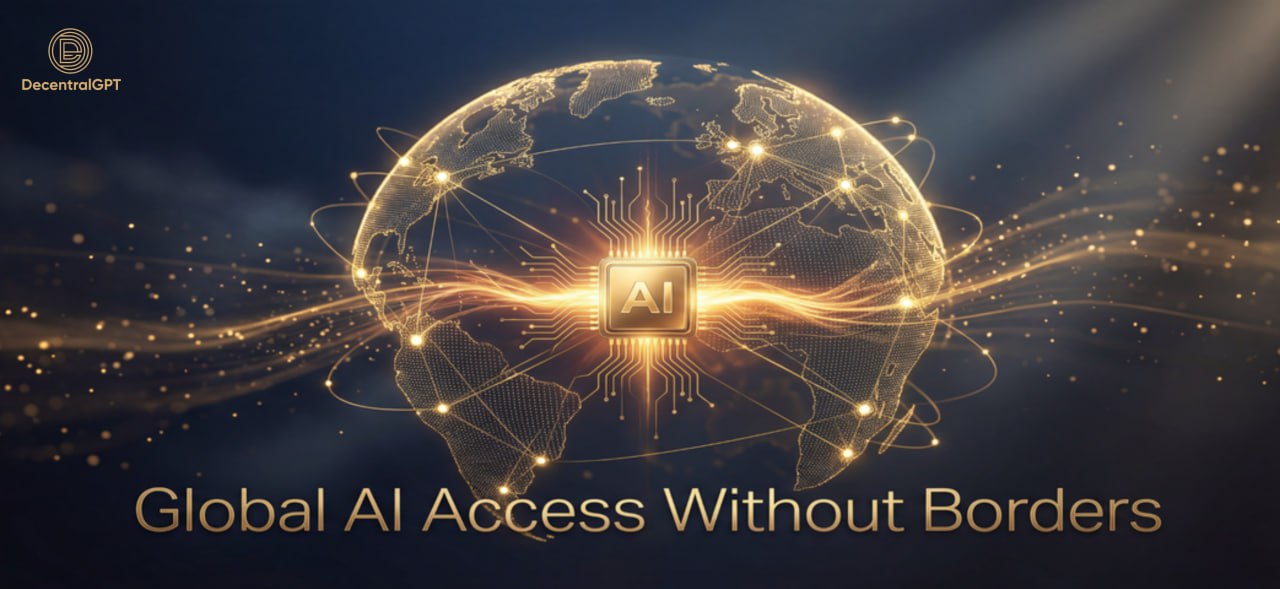
DecentralGPT global decentralized AI platform illustration showing multi-model LLM access for users worldwide
The Real Question in 2026: "Can I Use It Where I Live?"
In 2026, the biggest issue for many users isn’t "Which model is best?" It’s simply: "Can I use it where I live?"
Major AI products often have country/region availability rules. OpenAI, for example, publishes an official list of supported countries/regions for ChatGPT and warns that access outside those regions can lead to blocking or suspension.
And in some regions, access can change quickly due to policy and compliance shifts. For instance, reporting in July 2024 noted OpenAI suspended services to mainland China, Hong Kong, and Macau.
For users and teams working across borders, this creates a practical pain point: inconsistent availability, fragmented tool stacks, and unreliable workflows for global communities and remote teams.
DecentralGPT’s Approach: More Open, More Global by Design
DecentralGPT positions itself as a decentralized and distributed AI inference computing network, supporting a variety of large language models and aiming to build AI that is open-source and accessible to everyone.
This direction matters because decentralized infrastructure can be designed to be: less dependent on a single provider or single region, more resilient at the network level, and better aligned with global communities (Web2 + Web3).
Also, DecentralGPT describes its network as allowing GPU computers from any location around the globe to connect and contribute computing power.
Important note (for clarity): "Global" does not mean ignoring local laws. It means building infrastructure and product distribution with broader accessibility in mind, while remaining compliant in the markets you operate.
Why Multi-Model Matters for Global Users
Availability isn’t the only issue—choice is the second. Different users need different strengths: writing and summarizing, coding and debugging, reasoning and planning, multilingual content, research and structured outputs.
DecentralGPT’s product direction emphasizes multi-model access in one place, so users can choose the best model for the job without juggling multiple subscriptions and apps.
That’s the practical value: one platform → multiple model options → easier workflows.
Try the product here: https://www.degpt.ai/
Who Benefits Most From This "Global + Multi-Model" Setup
1) International teams and global communities
If your users and contributors come from multiple countries, you don’t want your core AI workflow to depend on one region’s availability rules.
2) Web3 builders
Web3 teams often operate globally by default. A platform built on decentralized infrastructure fits naturally with that reality—especially when you need an AI tool accessible to a broad audience.
3) Everyday users who want one place for top capabilities
Instead of paying for several tools (and dealing with multiple logins and restrictions), many users prefer one platform where they can switch models based on the task.
Summary
The AI market is moving fast—but availability and access are becoming just as important as model performance.
DecentralGPT fits this shift by building: a decentralized AI inference computing network, a product direction focused on multi-model access in one place, and a mission centered on AI that is open-source and accessible.
For global users, that combination is the difference between "nice to have" and "actually usable."
Call to Action
Try DeGPT (multi-model access): https://www.degpt.ai/
Learn more about DecentralGPT: https://www.decentralgpt.org/